
Reflections on a Journey Toward Godliness
In my early years as a newlywed, I imagined that with time I would naturally become a wiser and more devoted person simply by the passage of years. I never anticipated that life’s challenges would take such diverse forms or that growth would emerge slowly through trials. Over the years, I have experienced hardships such as infertility, ongoing illness, and the complexities of being a pastor’s wife, each serving as unexpected instruments in God’s plan for my personal sanctification. I have come to understand that the process of growing in faith often departs from our expectations, yet it remains undeniably effective.
Not long after my marriage, a friend lent me an old book published in the 19th century. Despite its fictional framework, its narrative is deeply autobiographical, presenting the life of a young woman in New England who faces the sorrow of losing her father. The challenges and emotions recounted in its pages resonated strongly with me, reminding me that the work of spiritual growth is the work of the Holy Spirit. Although the story was written more than a hundred years ago, I saw parts of my own struggle for spiritual maturity reflected in its central character.
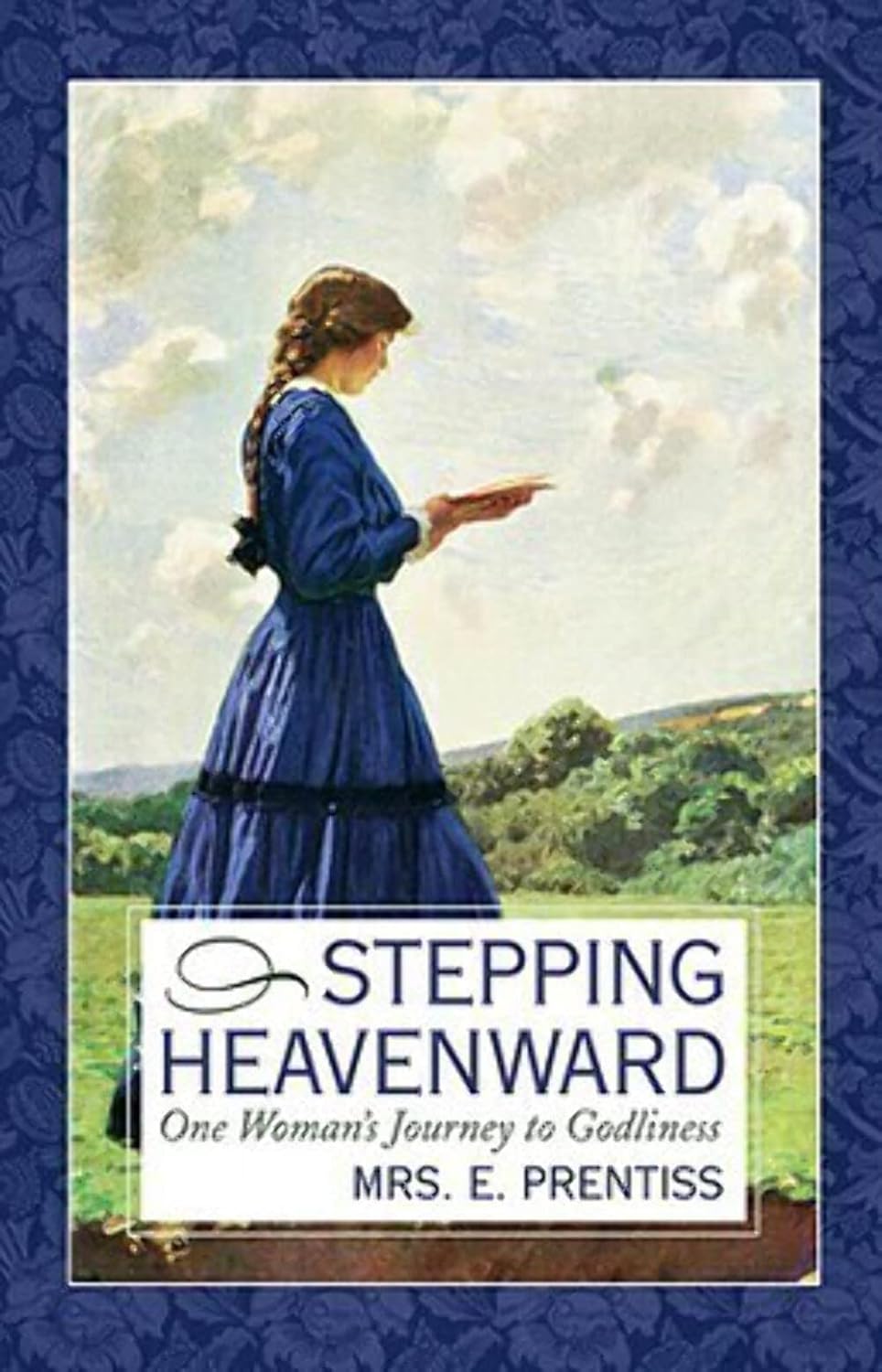
Stepping Heavenward: One Woman’s Journey to Godliness
Elizabeth Prentiss
This enduring work, written as a series of personal reflections, begins with the spirited voice of a young girl who exclaims, “How dreadfully old I am getting! Sixteen!” It is a candid diary that charts the growth of a young woman who gradually learns that true joy is found in dedicating oneself to others. The book brims with both heartfelt and practical wisdom about spirituality and womanhood, and it encourages readers—regardless of gender—to delve deeper into understanding the divine while navigating life’s relationships.
Sanctified Reluctantly
The narrative unfolds through the personal journal of Katherine Elliott over a span of about thirty years. In its early entries, we encounter 16-year-old Katy, whose youthful defiance and passionate desire for life stand in stark contrast to the spiritual discipline required to walk closely with Christ. She struggles with pleasing everyone around her and often approaches church and prayer with reluctance. Her inner conflict is vividly drawn as she articulates the longing to enjoy life in the present moment while quietly hoping that someday she will have transformed into someone deserving of eternal joy.
Reading these early reflections in my own youth, I found that I too longed for a life of ease without embracing the commitments of spiritual transformation. I mistakenly assumed that simply growing older would naturally bring about spiritual maturity. However, true growth in faith is achieved only through a deliberate and continuous walk with Christ, not merely by the passage of time.
Sanctified by Ordinary Means
Katherine’s journey takes her through the everyday struggles of managing household duties, coping with a demanding spouse in the medical field, and handling challenging family dynamics. These routine trials serve a dual purpose: they not only test her patience but also gently shape her character. As she learns to cast her frustrations into prayer and immerse herself in Scripture, her heart slowly exchanges discontent for a deep-seated joy in the Lord.
The author reminds us that every experience in life, no matter how mundane, can be an opportunity for divine growth. Although we might not understand why certain hardships occur, we can trust that each is imbued with purpose by a loving and wise Creator.
Sanctified by Suffering
As Katherine transitions into midlife, her sustained closeness to Christ results in profound inner transformation. Her diary reflects not only the evolution of her character but also the supportive role played by her pastor, whose visits and encouraging messages come at crucial moments. Facing the challenges of a long-term illness that confines her to bed, Katherine learns to rely on the wisdom of those around her. In these vulnerable moments, she comes to view pain and enduring struggle as part of the divine process that leads to spiritual refinement.
The experiences of suffering ultimately serve to reaffirm her trust in God’s unwavering love and purposeful guidance, even when she cannot fully grasp the reasons behind her trials.
Sanctified and Loved
Rather than resisting the inevitable hardships, Katherine embraces them as part of her journey toward deeper intimacy with God. She comes to understand that the challenges and sorrows she endures are not empty punishments but opportunities to experience and reflect upon God’s love more profoundly. In her final reflections, her gratitude shines through as she acknowledges that every moment of pain has contributed to an ever-deepening love for the Lord.
This timeless narrative, though birthed in a past century, continues to speak clearly to contemporary believers. It serves as a reminder that a life immersed in the divine Word and surrendered to God’s will is one marked by slow but steady transformation—a journey of grace that blossoms through both ordinary circumstances and moments of suffering.

Rockin’ the faith, one verse at a time!
Growing up, the Bible’s stories deeply impacted me. Now, with over 15 years of preaching experience, I blend timeless teachings with modern technology, making them relevant for today’s world.
Bible Hub Verse is my platform to share historical insights and thought-provoking articles, exploring both familiar and uncommon Christian topics. My passion is building a welcoming online space for everyone to learn, grow in their faith, and discover the Bible’s enduring message.
Join the journey!
God bless you.

 By
By