
An In-Depth Exploration of The Ghost Lab
Imagine a society where belief in aliens outstrips faith in the criminal justice system, where confidence in supernatural abilities overshadows trust in government, and the notion of ancient visitors to our planet eclipses reliance on local news. In parts of New Hampshire—and increasingly in other regions of the United States—these peculiar attitudes are not far from reality.
In his latest work, The Ghost Lab: How Bigfoot Hunters, Mediums, and Alien Enthusiasts Are Wrecking Science, freelance journalist Matthew Hongoltz-Hetling examines the link between eroding institutional confidence and the surge in paranormal interest. Following his earlier exploration of anti-institutional sentiment in a small New Hampshire town, this book delves into the investigation collective known as the Kitt Research Initiative (KRI), one of many groups involved in paranormal pursuits during the 2010s.
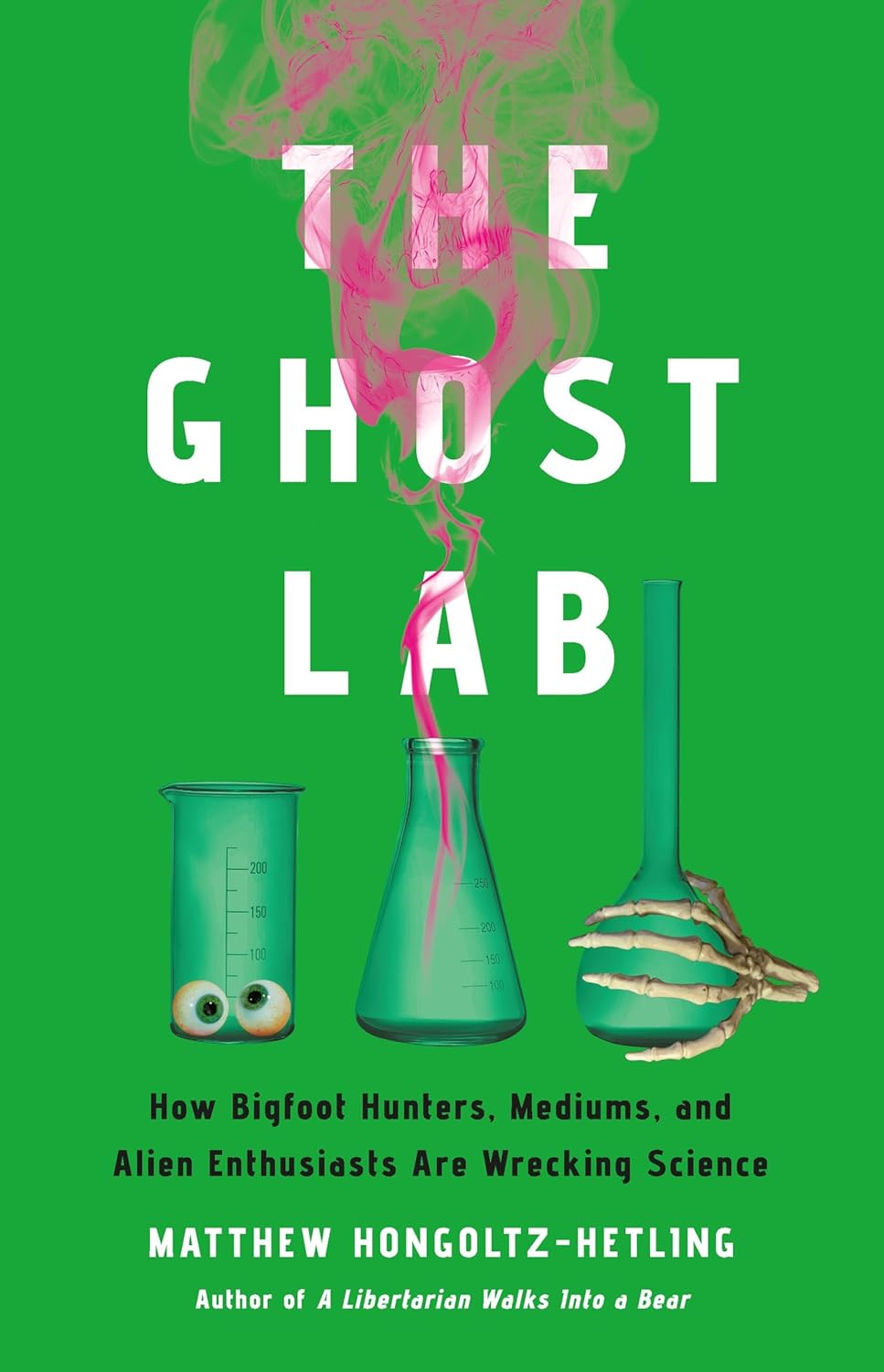
The Ghost Lab: Unmasking the Paranormal Marketplace
The Ghost Lab: How Bigfoot Hunters, Mediums, and Alien Enthusiasts Are Wrecking Science
Author: Matthew Hongoltz-Hetling | Publisher: PublicAffairs | Length: 352 pages
This book delves into the surreal network of paranormal profilers and their eager followers. Alongside documenting bizarre séances, ghost hunts, and reports of alien encounters, Hongoltz-Hetling underscores how declining scientific understanding and a breakdown in institutional confidence have paved the way for pseudoscience to capture an increasingly trusting public.
Crisis of Faith
Traditional institutions are not only crumbling but also losing the trust they once commanded. Instead of relying on established pillars of authority, many individuals are now placing their confidence in an assorted group of independent mentors, spiritual advisors, and healers—exemplified by the members of the KRI.
Throughout the narrative, Hongoltz-Hetling maintains an observational tone, seeking to comprehend how fervent believers reconcile their unorthodox views with modern disenchantment. He suggests that to maintain a belief in ghosts, aliens, or mysterious creatures, one must assume that the silence of science, government, and similar institutions is either a result of profound incompetence or outright corruption. This perspective lies at the core of the convictions held by paranormal investigation groups.
Fundamentally, the book poses an age-old question: How do we determine what is true? For Hongoltz-Hetling, science holds the key to objective, universal truth. He also bemoans the diminished trust in academic and research institutions, lamenting a decline in clear and engaging communication. While he acknowledges that many institutions share blame for their own loss of credibility—citing issues like economic inequality and declining life expectancy—the conversation stops short of addressing even more explicit controversies in modern discourse.
Confronting the Paranormal
Even as traditional structures falter, the realm of spiritualism and paranormal fascination continues to expand. Hongoltz-Hetling recounts the adventures of the KRI with a mix of gentle humor and cautious critique. For much of the book, the paranormal manifestations seem rooted more in fanciful imaginations or deliberate deception than in anything overtly demonic. However, the narrative takes a jarring turn in one chapter when a tarot-card reader associated with the group commits a violent crime, brutally upending an otherwise surreal collection of anecdotes.
This shocking incident is presented as a stark reminder of the dangers lurking when reality and myth intertwine. While some may dismiss paranormal encounters as harmless fabrications, Hongoltz-Hetling illustrates that in a world where truth is obscured, even subtle deceptions can pave the way toward tragedy. The book cautions readers that the threat posed by evil is not always dramatic; sometimes it is the quiet, incremental erosion of truth that leads us astray.
Building Trust Within the Church
Amid widespread skepticism and the proliferation of ideological echo chambers online, the local church stands out as a bastion of community and mutual trust. Unlike the transient alliances formed on social media, church communities are forged around shared, timeless values rather than fleeting political or cultural trends. This environment nurtures genuine dialogue and offers a foundation for understanding different perspectives, creating a resilient trust network that can counterbalance broader institutional failures.
Church leaders are encouraged to approach empirical questions with humility, recognizing that public policy, scientific findings, and societal trends may shift rapidly, while biblical principles remain fixed. By fostering open, respectful discussions, pastors can help congregants navigate complex issues without succumbing to overconfidence or division.
Hongoltz-Hetling, a finalist for the Pulitzer Prize, demonstrates exceptional storytelling as he weaves together the themes of institutional distrust and the emergence of a paranormal subculture. Although his exploration may steer some readers off familiar paths, the insights presented underscore the significance of the church in promoting trust and discernment in an increasingly uncertain and mystifying world.

Rockin’ the faith, one verse at a time!
Growing up, the Bible’s stories deeply impacted me. Now, with over 15 years of preaching experience, I blend timeless teachings with modern technology, making them relevant for today’s world.
Bible Hub Verse is my platform to share historical insights and thought-provoking articles, exploring both familiar and uncommon Christian topics. My passion is building a welcoming online space for everyone to learn, grow in their faith, and discover the Bible’s enduring message.
Join the journey!
God bless you.

 By
By